Choosing the right high-speed motor requires more than reading its maximum revolutions per minute. Global buyers must consider torque, duty cycle, cooling, noise, efficiency, and service support. This guide examines ten leading motor options for demanding industrial and commercial applications. Each selection is reviewed through practical performance factors, including rated speed, continuous output, bearing design, controller compatibility, and expected operating life. Small details matter. A motor spinning above 20,000 rpm may need precise balancing, strong housing materials, and careful installation. Speed alone misleads.
The right High Speed Motor should match the machine, power supply, environment, and maintenance capability. We consider products used in compressors, pumps, machine tools, robotics, medical equipment, and electric mobility systems. Attention is also given to datasheet clarity, factory testing, warranty terms, and global availability. Where possible, buyers should request efficiency curves, thermal limits, vibration data, and conformity documentation based on relevant IEC or regional requirements. Testing conditions vary. A laboratory result may not represent dusty workshops, frequent starts, or unstable temperatures. That limitation deserves attention.
This overview reflects common engineering evaluation practices, but it is not a substitute for application testing. Buyers should verify shaft loads, mounting dimensions, insulation ratings, and drive settings before purchase. Suppliers should provide traceable specifications and responsive technical support. These checks help reduce costly mismatches and unexpected downtime. The list is not a permanent ranking. It is a practical starting point for comparison, and some recommendations may change as technologies, prices, and regional supply conditions develop.
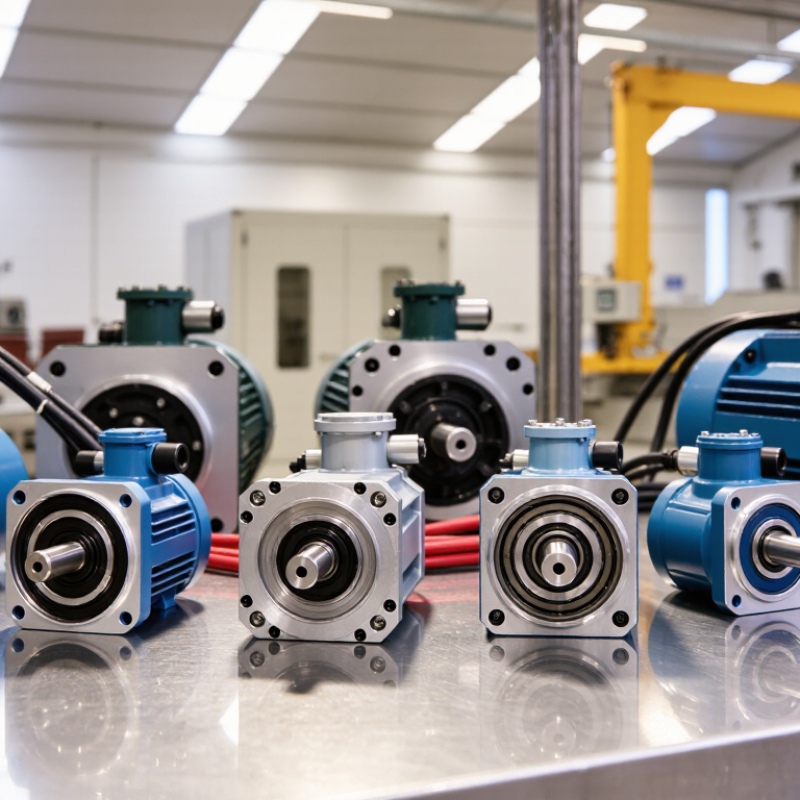
What Defines a High-Speed Motor for Global Buyers
What Defines a High-Speed Motor for Global Buyers
A high-speed motor is not defined by rpm alone. Its real value depends on speed stability, torque delivery, thermal control, and service life. In many industrial applications, speeds above 10,000 rpm are considered high, but the threshold varies by machine design. A compact compressor may demand 30,000 rpm, while a precision spindle may require less speed and greater accuracy.
The numbers matter. The International Energy Agency reports that electric motor systems consume roughly half of global electricity. The U.S. Department of Energy estimates that motor-driven equipment uses nearly 70% of industrial electricity in the United States. These figures make efficiency more than a purchasing preference.
Buyers should examine rated efficiency, load profiles, and standby losses. A motor running at 18,000 rpm should also show clear bearing limits, insulation ratings, cooling capacity, and vibration data. A 0.02 mm shaft runout can create serious problems at high speed. Acoustic noise and thermal expansion deserve attention too.
Global buyers must verify voltage, frequency, enclosure protection, certification, and local maintenance support.
IEC 60034 standards provide useful testing and performance references, but they do not remove every application risk.
A laboratory rating may not match dusty production conditions. That gap is easy to underestimate. The best motor is not always the fastest; it is the one that sustains required speed without excessive heat, vibration, or downtime.
Key Specifications for Comparing High-Speed Motor Performance
Choosing among the 10 best high-speed motors requires more than comparing maximum revolutions per minute. Check rated speed, continuous power, torque, efficiency, and duty cycle together. A motor reaching 30,000 rpm may deliver less usable torque than a 15,000 rpm model. That difference appears during acceleration, cutting, or compressor loading.
Efficiency deserves close attention. The International Energy Agency reports that electric motor systems use around half of global electricity, making small performance gaps financially important. Compare efficiency at the actual operating point, not only at the rated load. IEC 60034-30-1 provides recognized efficiency classifications, including IE3 and IE4. Thermal limits also matter. Review winding temperature, cooling method, ambient rating, and allowable overload time. A compact housing can become dangerously hot in a dusty workshop.
Bearings and rotor balance influence service life at high speed. Ask for vibration data, balancing grade, shaft runout, and acoustic measurements. The U.S. Department of Energy estimates motor-driven systems consume roughly 70% of industrial electricity in the United States. Therefore, inverter compatibility and partial-load efficiency deserve careful testing. Do not ignore control quality. Poor tuning can create current spikes and unstable torque. I would also request test curves, though some suppliers provide incomplete figures. That gap needs scrutiny. A credible comparison includes documented tests, operating conditions, and warranty terms, rather than impressive speed claims alone.
10 Best High Speed Motors for Global Buyers - Key Specifications for Comparing High-Speed Motor Performance
| No. |
Motor Type / Configuration |
Rated Power |
Rated Speed |
Maximum Speed |
Rated Voltage |
Efficiency |
Cooling Method |
Bearing System |
Protection |
Recommended Applications |
| 1 |
Two-Pole Premium Induction Motor |
75 kW |
2,950 rpm at 50 Hz |
3,600 rpm |
400 V, 3-phase |
IE3 / IE4 |
TEFC, IC411 |
Grease-lubricated rolling bearings |
IP55 |
Pumps, fans, compressors and general industrial drives |
| 2 |
Permanent-Magnet Synchronous Motor |
30 kW |
3,000 rpm |
6,000 rpm |
400 V, 3-phase |
Up to 96% |
Liquid jacket |
Hybrid ceramic bearings |
IP65 |
Servo drives, robotics, compressors and energy-efficient machinery |
| 3 |
High-Speed Permanent-Magnet Motor |
100 kW |
12,000 rpm |
20,000 rpm |
690 V, 3-phase |
Up to 97% |
Oil spray or liquid cooling |
Active magnetic bearings |
IP54 |
Turbo compressors, high-speed pumps and industrial expanders |
| 4 |
High-Speed Induction Motor with Variable-Frequency Drive |
45 kW |
3,600 rpm |
7,200 rpm |
460 V, 3-phase |
Up to 94% |
Forced-air, IC416 |
Insulated rolling bearings |
IP55 |
Machine tools, centrifuges and variable-speed process equipment |
| 5 |
Built-In Electric Spindle Motor |
18.5 kW |
24,000 rpm |
30,000 rpm |
380 V, 3-phase |
85–92% |
Water-cooled stator |
Ceramic angular-contact bearings |
IP54 |
CNC milling, grinding, routing and precision machining |
| 6 |
High-Speed Brushless DC Motor |
5 kW |
6,000 rpm |
12,000 rpm |
48–96 V DC |
85–92% |
Natural or forced air |
Sealed ball bearings |
IP65 |
Battery-powered equipment, mobile robots, blowers and small pumps |
| 7 |
Air-Cooled High-Speed Spindle Motor |
7.5 kW |
18,000 rpm |
24,000 rpm |
220 V, 3-phase |
80–88% |
Integrated forced air |
Precision ball bearings |
IP54 |
Wood, plastic and aluminum routing; light-duty CNC machining |
| 8 |
High-Speed Synchronous Reluctance Motor |
55 kW |
3,000 rpm |
6,000 rpm |
400 V, 3-phase |
IE5-class efficiency |
TEFC, IC411 |
Insulated rolling bearings |
IP55 |
Fans, pumps, compressors and applications requiring low rotor losses |
| 9 |
High-Speed Axial-Flux Permanent-Magnet Motor |
50 kW |
4,000 rpm |
8,000 rpm |
400 V, 3-phase |
Up to 96% |
Liquid cooling |
Sealed rolling bearings |
IP67 |
Electric vehicles, compact traction systems and space-limited machinery |
| 10 |
High-Speed Generator Motor Set |
250 kW |
15,000 rpm |
18,000 rpm |
690 V, 3-phase |
Up to 97% |
Liquid-cooled stator and rotor |
Active magnetic bearings |
IP44–IP54 |
Waste-heat recovery, microturbines, distributed generation and turbo-machinery |
Note: Specifications are representative values for common high-speed motor configurations. Actual performance depends on the motor design, inverter, operating temperature, duty cycle, load profile, installation conditions and applicable regional standards.
Top 10 High-Speed Motor Types and Their Main Applications
10 Best High Speed Motors for Global Buyers
Top 10 High-Speed Motor Types and Their Main Applications
High-speed motor selection starts with load behavior, not speed alone. Brushless DC motors suit drones, cooling fans, pumps, and compact automation. Permanent-magnet synchronous motors deliver efficient, stable output in compressors and electric machinery. Induction motors tolerate demanding industrial environments, including blowers, conveyors, and machine tools. Switched reluctance motors handle harsh conditions and high-temperature equipment, although their torque ripple can require careful control.
Servo motors provide precise speed and position control for robotics, packaging lines, and inspection systems. High-speed spindle motors support milling, grinding, and precision cutting. Synchronous reluctance motors offer strong efficiency for pumps and air-handling equipment. Universal motors reach very high speeds in portable tools and small appliances, but brush wear remains a maintenance concern. Small details matter.
Air-turbine motors work well in dental instruments, laboratory devices, and lightweight precision tools. High-frequency induction motors are useful in compact spindles and specialized processing equipment. In practice, cooling, bearing life, vibration, and inverter compatibility can decide performance more than the catalog speed. Ceramic bearings may reduce heat, yet they raise system cost. A sealed housing protects against dust, but it can trap heat. I have seen specifications look impressive while poor thermal design shortened service life. Buyers should verify duty cycle, shaft load, noise limits, and local electrical requirements before approval.cuntegn
How to Evaluate Efficiency, Durability, and Control Systems
For global buyers, a high-speed motor should be judged beyond its rated revolutions. Start with efficiency at the actual load, not only the catalog peak. Check IEC 60034-30-1 efficiency data, power factor, heat rise, and performance across the operating range. A motor running at 20 percent load may waste energy despite an impressive headline rating. Request test conditions and tolerances. They matter. Match voltage, frequency, and cooling method to the installation country. Small mismatches become expensive problems.
Durability begins with bearings, rotor balance, insulation, and housing protection. Ask for vibration limits, bearing life calculations, shaft material, and IP rating. For dusty factories, sealed construction and thermal protection are practical safeguards. For continuous duty, confirm insulation class and allowable temperature rise. Review overload capability, start-stop cycles, and maintenance access. In practical audits, motors sometimes fail early because operators ignore ambient heat. The specification looked excellent. Real conditions were harsher.
Control systems decide whether speed becomes useful production. Evaluate inverter compatibility, encoder feedback, braking response, and fault monitoring. Closed-loop control can hold speed under changing loads, but it adds wiring and setup demands. Sensorless control costs less, yet accuracy may decline at low speed. Ask for communication protocols, parameter backups, cybersecurity provisions, and service documentation. A clear commissioning guide reduces mistakes across language and training differences. Do not accept vague claims. Compare witnessed tests, independent certificates, warranty terms, and available spare parts. My preference is measurable evidence, although even test results need context.
10 Best High Speed Motors for Global Buyers
Comparing rated speed, peak efficiency, durability, and control-system suitability
The comparison uses representative nominal specifications commonly found in industrial high-speed motor applications. Higher efficiency reduces operating losses, while durability ratings reflect suitability for continuous duty, thermal cycling, bearing load, and demanding operating environments. Closed-loop vector or sensor-based control is generally preferred for precise speed regulation.
Global Buying Factors: Standards, Suppliers, Costs, and Support
When comparing ten high-speed motor options, global buyers should examine standards before performance claims.
A motor rated at 18,000 rpm still needs stable operation under real load conditions. Check IEC 60034 requirements for rotating electrical machines and confirm applicable regional certifications. Depending on the destination, CE, UL, or other approvals may be necessary. Request test reports, insulation data, noise readings, and balancing results. Do not accept vague compliance statements. A certificate without traceable testing is weak evidence. This step is often rushed.
Supplier evaluation requires practical evidence, not attractive catalogs.
Ask about production capacity, inspection procedures, and experience with export packaging. Factory audit records can reveal how carefully bearings, shafts, and cooling systems are handled. Request sample reports from motors with similar speed and power ratings. Compare total landed cost, including freight, duties, installation tools, spare parts, and maintenance intervals. The cheapest quote may become expensive after repeated bearing failures. I have seen this happen.
After-sales support can decide whether a motor remains useful.
Confirm response times, warranty limits, remote troubleshooting, and replacement-part availability. For installation, ask for wiring diagrams, mounting tolerances, lubrication guidance, and vibration limits. Also clarify who pays for defective components and return shipping. Keep communication records in clear English. One weakness remains. Some suppliers promise rapid support but provide slow technical answers after payment. Buyers should test this service before placing a large order.
FAQS
Speed alone does not define it. Many industrial motors exceed 10,000 rpm. A compact compressor may need 30,000 rpm, while a spindle may prioritize accuracy.
Check speed stability, torque delivery, heat control, vibration, and service life. Request bearing limits, insulation ratings, cooling capacity, and vibration data. The fastest option may not be the best option.
Motor systems consume a large share of industrial electricity. Review rated efficiency, load profiles, and standby losses. A small efficiency gap can become a large operating cost.
It is extremely important. A shaft runout of 0.02 millimeters can create serious vibration. Ask for balancing results and measured runout data.
Confirm voltage, frequency, enclosure protection, and regional certification needs. Check whether the motor suits dusty production areas. Laboratory performance may not match factory conditions.
Request traceable test reports, inspection records, and samples with similar speed and power. Review production capacity and export packaging experience. Attractive catalogs prove very little.
Calculate freight, duties, installation tools, spare parts, and maintenance intervals. Repeated bearing failures can make a cheap motor expensive. This happens more often than expected.
Ask about response times, warranty limits, remote troubleshooting, and replacement parts. Request wiring diagrams, mounting tolerances, lubrication guidance, and vibration limits. Test support before placing a large order.
Conclusion
Choosing the right High Speed Motor requires more than comparing rotational speed alone. Global buyers should consider operating frequency, torque, power density, voltage, cooling method, bearing design, noise, vibration, and service life. This guide introduces ten major high-speed motor types and explains their typical applications in industrial equipment, automation, pumps, compressors, transportation, and precision machinery. It also highlights how motor construction and control technologies influence performance under different working conditions.
A reliable purchasing decision should balance efficiency, durability, controllability, installation requirements, and total operating cost. Buyers should verify compliance with relevant international standards, evaluate supplier manufacturing capability, review testing and quality documentation, and confirm availability of spare parts and technical support. Attention should also be given to shipping, local regulations, warranty terms, maintenance resources, and long-term energy consumption. By comparing these factors systematically, companies can select a high-speed solution that delivers stable performance, reasonable lifecycle costs, and dependable support across global markets.

 Goaxis Pro