China’s variable speed motor sector supports factories, pumps, compressors, conveyors, and modern building systems. A reliable supplier can influence energy costs, uptime, and maintenance risk.
The International Energy Agency reports that electric motor systems consume roughly 43% to 46% of global electricity. Its motor-systems research also identifies substantial savings through efficient motors, controls, and better system design. The U.S. Department of Energy similarly states that motor-driven equipment represents more than half of industrial electricity consumption. These figures explain why the Variable Speed Motor market deserves technical, not purely commercial, evaluation.
The details matter.
This guide examines China’s leading manufacturers and suppliers through efficiency ratings, production capability, certifications, customization, testing, and after-sales support. A factory visit should reveal balanced rotors, clean winding areas, calibrated test benches, and traceable inspection records. Suppliers should clearly explain IEC or GB/T compliance, IE3 or IE4 efficiency, inverter-duty insulation, operating temperature, torque range, and warranty conditions.
Professor Ali Emadi, a respected motor and power-electronics researcher, describes electric motors as “the workhorses of modern industry.” His observation remains practical. A Variable Speed Motor must deliver stable torque when a pump slows, a conveyor starts, or a compressor faces changing loads.
Catalogues can mislead.
Price alone is a weak comparison. Some suppliers publish impressive efficiency data but provide limited field support or unclear testing methods. That weakness deserves attention. Therefore, this overview considers verified evidence, application experience, and long-term reliability, while recognizing that no manufacturer is perfect for every project.
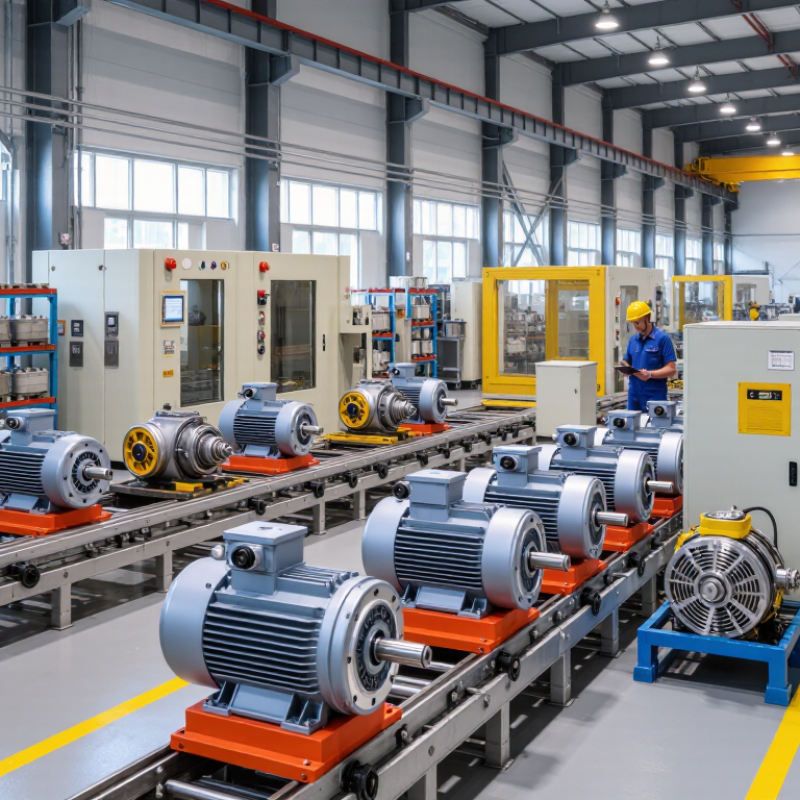
A variable speed motor is an electric motor designed to run at different rotational speeds. Unlike a fixed-speed motor, it can match output to changing operating demands. This control reduces wasted energy in fans, pumps, conveyors, mixers, and machine tools.
The motor usually works with a variable frequency drive, or VFD. The VFD changes the frequency and voltage supplied to the motor. Lower frequency normally produces slower rotation, while higher frequency increases speed within safe limits. An internal controller reads commands from a panel, sensor, or automation system. It then adjusts power several times each second. In a pump room, pressure may fall when several valves open. The controller raises motor speed to restore flow. When demand drops, it slows the motor instead of forcing full output. This can reduce noise, heat, and energy use.
Correct sizing matters as much as speed control. Engineers check torque, load type, starting conditions, enclosure protection, cooling, and duty cycle. A conveyor may need strong torque at low speed, while a fan behaves differently. Poor settings can cause vibration or overheating. I have seen performance estimates look convincing until real loads changed during production. Testing under actual conditions is essential. Even experienced teams can overlook cable length, harmonics, or inadequate ventilation. A reliable supplier should provide motor curves, drive compatibility data, testing records, and commissioning support.
Key Types of Variable Speed Motors Used in Industrial Applications
Variable speed motors help factories match output with real demand. The right type depends on torque, speed range, duty cycle, and control accuracy. AC induction motors remain common for pumps, fans, conveyors, and compressors. They are durable, cost-effective, and practical with variable frequency drives. Their performance can drop at very low speeds without suitable cooling.
Permanent magnet synchronous motors provide high efficiency and strong torque at lower speeds. They suit precision conveyors, elevators, and compact production equipment. Synchronous reluctance motors offer efficient operation without permanent magnets. They can work well in pumps and ventilation systems, but drive setup requires careful tuning. DC motors still appear in older machinery, although maintenance can be higher because of brushes and commutators. Servo motors serve applications needing rapid acceleration and exact positioning. They are powerful, but often excessive for simple speed control.
Tips: Check the load curve before choosing a motor. Measure starting torque, operating speed, ambient temperature, and braking needs. An inverter-duty motor may handle repeated speed changes better. Confirm enclosure protection and cooling at low speed. I have seen selections based only on rated horsepower, and that approach often fails. It sounds convenient. It is not. Test the motor and drive together when possible, because noise, heat, and harmonics may appear only under real operating conditions.
Comparison of common industrial motor technologies, speed-control methods, operating characteristics, and typical applications
| Motor Type | Typical Speed-Control Method | Typical Power Range | Typical Speed Range | Key Advantages | Important Considerations | Common Industrial Applications |
|---|---|---|---|---|---|---|
| AC Induction Motor | Variable-frequency drive (VFD) using adjustable frequency and voltage | 0.12–1,000+ kW | Typically 5–3,600 rpm, depending on pole count and drive settings | Robust construction, low maintenance, widely available, and suitable for constant-torque or variable-torque loads | Low-speed cooling and torque may require a separately powered fan, encoder, or vector-control drive | Pumps, fans, compressors, conveyors, mixers, machine tools, and material-handling equipment |
| Permanent-Magnet Synchronous Motor (PMSM) | Inverter or servo drive with electronic commutation and rotor-position feedback or sensorless control | Approximately 0.1–500 kW | Commonly 100–6,000 rpm; higher speeds are possible with suitable design | High efficiency, high power density, strong low-speed torque, and reduced rotor losses | Higher initial cost; magnets require appropriate thermal management, and drive compatibility is essential | High-efficiency pumps, compressors, elevators, conveyors, extruders, machine tools, and energy-saving retrofit systems |
| Brushless DC Motor (BLDC) | Electronic commutation through a dedicated controller using Hall sensors, encoders, or sensorless feedback | Approximately 10 W–100 kW | Typically 100–10,000 rpm | High efficiency, compact size, fast response, and no brush wear | Requires an electronic controller; torque ripple, electromagnetic compatibility, and thermal limits must be evaluated | Small pumps, fans, robotics, automated equipment, compact conveyors, actuators, and precision machinery |
| Wound-Rotor Induction Motor | External rotor-resistance control, liquid resistance starter, or modern variable-frequency drive | Approximately 100–10,000 kW | Typically 100–1,800 rpm | High starting torque and controlled acceleration for heavy-inertia or high-load equipment | Slip rings and brushes increase maintenance; resistance control dissipates energy as heat | Large crushers, mills, hoists, cranes, conveyors, ball mills, and heavy-duty process machinery |
| Synchronous Reluctance Motor | Variable-frequency drive with vector control | Approximately 1–500 kW | Typically 300–3,600 rpm | High efficiency, low rotor losses, good power factor when correctly controlled, and no permanent magnets | Requires a compatible drive and accurate motor parameters; starting is normally drive-assisted | Fans, pumps, compressors, conveyors, extruders, and other constant-speed or variable-speed industrial loads |
| Switched Reluctance Motor (SRM) | Dedicated electronic converter that sequentially energizes stator phases | Approximately 0.1–500 kW | Typically 100–20,000 rpm | Simple and mechanically rugged rotor, high-speed capability, and tolerance to high-temperature rotor conditions | Audible noise, torque ripple, and converter-control complexity may require additional engineering | Fans, pumps, compressors, conveyors, machine tools, traction auxiliaries, and high-speed industrial drives |
| Servo Motor | Closed-loop servo drive using an encoder, resolver, or other position and speed feedback device | Approximately 50 W–500 kW | Typically 1–6,000 rpm, with higher ratings available | Precise speed, position, and torque control; rapid acceleration; and high dynamic response | Higher system cost and commissioning requirements; sizing must account for peak torque and duty cycle | Robotics, CNC equipment, packaging machines, printing presses, textile machinery, and automated assembly lines |
| Slip-Frequency-Controlled AC Motor | Scalar V/f control or slip-compensated VFD operation without a high-resolution feedback device | Approximately 0.12–250 kW | Typically 30–3,600 rpm | Cost-effective speed control with straightforward installation and sufficient performance for many standard loads | Lower speed accuracy and dynamic torque response than closed-loop vector or servo systems | Fans, centrifugal pumps, simple conveyors, blowers, and general-purpose process equipment |
Technical note: Power and speed ranges are indicative industry ranges rather than universal limits. Actual performance depends on motor frame size, pole count, cooling method, insulation system, duty cycle, load profile, drive settings, and applicable IEC or NEMA requirements.
Evaluating China-based variable speed motor manufacturers requires more than comparing catalog prices. The International Energy Agency estimates that electric motor systems consume about 53% of global electricity. Small efficiency differences can therefore create significant operating costs. Request tested efficiency curves, rated-load data, temperature-rise results, and vibration measurements for the exact model supplied.
Check whether the factory follows IEC 60034 requirements and uses recognized efficiency classifications. Ask for sample test reports, serial-number traceability, winding records, and calibration certificates. A credible supplier should explain how its motors perform with variable frequency drives, including insulation protection, cooling limits, bearing risks, and low-speed torque. The U.S. Department of Energy reports that motor-driven equipment represents roughly 70% of industrial electricity use in the United States. This makes drive compatibility a commercial issue, not a technical detail.
Audit production capacity carefully. Review incoming-material inspection, rotor balancing, impregnation processes, final-load testing, and rejected-unit records. Independent inspection is useful, especially before large orders. Factory photos are not proof. A video call is weaker than an on-site audit. Request two production samples and compare their noise, current, temperature, and speed stability under the same load. Some suppliers provide excellent documents but inconsistent batch quality. That risk deserves honest attention. Also examine warranty terms, spare-part availability, response times, and experience with your target voltage and duty cycle. Low purchase cost can hide higher maintenance and energy expenses.
When comparing variable speed motors, start with the real load, not the catalog rating. The IEA’s Energy Efficiency 2023 report estimates that electric motor systems consume about 50% of global electricity. Small selection errors can therefore become large operating costs.
Check rated power, continuous torque, overload capacity, and the usable speed range. A conveyor may need steady torque at low speed, while a pump often follows a variable-torque curve. Confirm the motor and drive combination supports the application’s starting current and braking demands. Look for IE3 or IE4 efficiency classification under IEC 60034-30-1, but do not judge efficiency from the motor alone. Cable length, switching frequency, cooling, and harmonics can change field performance. The U.S. Department of Energy’s Improving Motor and Drive System Performance guidance also stresses system-level evaluation, including controls, load profiles, and maintenance.
Inspect the enclosure rating before installation. Dusty workshops and washdown areas may require different IP protection. Ask for tested temperature-rise data, vibration limits, insulation ratings, EMC compliance, and service intervals. A five-year energy estimate should include standby losses and replacement parts. It should not rely on perfect operating conditions. That is where many comparisons become optimistic. Request a documented test report and a clear warranty process. Then compare noise at the operator’s position, not only in a laboratory sheet.
Selecting China’s variable speed motor manufacturers requires more than comparing catalog prices. The IEA estimates that motor-driven systems consume about 53% of global electricity. Efficient selection matters. During ordering, request rated power, voltage, frequency, speed range, duty cycle, insulation class, enclosure rating, and applicable IEC 60034 standards. Ask for a signed technical datasheet, not only a sales quotation. Confirm shaft dimensions and terminal layout before production. One missed millimeter can delay installation.
Quality control should include incoming material checks, winding resistance tests, insulation testing, vibration measurement, temperature-rise testing, and a documented load test. Request serial-numbered inspection records and photographs of the nameplate, bearings, and wiring. The U.S. Department of Energy reports that properly applied variable speed drives can reduce fan and pump energy use by roughly 20% to 50%. Incorrect motor sizing can erase that benefit. It happens. A factory acceptance test with defined limits is safer than trusting verbal assurances.
After-sales support needs practical response times. Specify spare-part availability, remote troubleshooting, warranty exclusions, and escalation contacts in the purchase contract. Ask whether engineers can review fault codes, parameter settings, and installation conditions. Keep vibration and temperature records after commissioning. ISO 9001-based procedures improve traceability, but certification alone does not guarantee every shipment is perfect. Supplier audits, sample testing, and clear corrective-action reports remain necessary. A small pilot order is often wiser than committing immediately to a large batch.
Minimum nominal efficiency benchmarks for a 7.5 kW, four-pole motor under IEC 60034-30-1 efficiency classes. Higher-efficiency classes support quality-focused purchasing and long-term operating-cost control.
When ordering from China, buyers should verify the declared IE class, test documentation, inspection records, delivery requirements, and after-sales support before approving production.
It is an electric motor that runs at different rotational speeds. A fixed-speed motor cannot adjust as easily. This motor matches changing loads. It can reduce energy waste, noise, and heat.
A variable frequency drive changes the supplied frequency and voltage. Lower frequency usually creates slower rotation. Higher frequency increases speed within safe limits. A controller adjusts power several times each second.
Common applications include fans, pumps, conveyors, mixers, and machine tools. A pump may speed up when pressure falls. It slows when fewer valves need flow. The response is practical, not perfect.
Start with the real load, not only the catalog rating. Check power, torque, overload capacity, speed range, and duty cycle. Also review starting current and braking requirements. A conveyor may need strong low-speed torque. A fan usually follows a different load pattern.
Compare efficiency, continuous torque, insulation class, cooling, and enclosure protection. Check cable length, switching frequency, harmonics, and drive compatibility. Review noise near the operator’s position. Laboratory figures can look better than field results. That deserves doubt.
Dusty workshops and washdown areas may need different ingress protection. Confirm temperature-rise data, vibration limits, and insulation ratings. Poor ventilation can cause overheating. A clean test room proves little.
Request winding resistance, insulation, vibration, temperature-rise, and load-test records. Ask for serial-numbered inspection documents. Photographs should show the nameplate, bearings, and wiring. A factory acceptance test should include clear limits. Verbal promises are weak evidence.
Specify rated power, voltage, frequency, speed range, duty cycle, and shaft dimensions. Confirm terminal layout before production. One missed millimeter can delay installation. Request a signed technical datasheet and compatibility information.
Define spare-part availability, response times, warranty exclusions, and escalation contacts. Engineers should review fault codes and parameter settings remotely. Keep vibration and temperature records after commissioning. A small pilot order may be safer than a large commitment. I would not assume every shipment is perfect.
A Variable Speed Motor is designed to adjust rotational speed according to changing operating requirements, helping improve process control, energy efficiency, and equipment performance. This article explains how variable speed motors work with electronic drives or control systems and introduces common industrial types, including AC, DC, and permanent magnet motors. It also outlines how to evaluate manufacturers and suppliers in China by reviewing technical expertise, production capacity, certifications, testing procedures, customization options, and export experience.
Before making a purchase, buyers should compare efficiency, torque range, speed regulation, protection level, noise, durability, installation requirements, and compatibility with existing equipment. The article also highlights practical considerations for ordering, such as clear specifications, sample approval, inspection standards, packaging, and delivery schedules. Reliable quality control and responsive after-sales support, including technical guidance, spare parts availability, warranty policies, and troubleshooting assistance, are essential for achieving stable long-term operation.
