Choosing a 12V Gear Motor in 2026 requires more than comparing prices and advertised torque. The right unit must match the load, speed, duty cycle, mounting space, and power supply. A motor turning at 60 RPM may appear suitable, yet it can stall when a conveyor starts under weight. Small errors matter. This guide introduces a practical method for evaluating motor specifications before purchase.
Real-world selection begins with measured conditions. Check the required output speed, starting torque, running torque, shaft orientation, gearbox type, and expected operating hours. Consider voltage drops in long wires and the current drawn during startup. A bench test with the actual load can reveal heat buildup, vibration, noise, and gearbox backlash. Testing beats guessing. Manufacturer datasheets, efficiency curves, protection ratings, and verified technical support also provide valuable evidence of reliability.
Some specifications remain easy to misunderstand. Rated torque is not always the same as stall torque, and a higher gear ratio may reduce speed too sharply. I have seen projects choose a powerful motor that overheated because ventilation was ignored. That mistake is worth remembering. This article will compare key motor types, explain selection calculations, and discuss control methods for modern automation, robotics, medical equipment, and small mobile systems. It will also identify details that product listings often leave unclear, including duty ratings, encoder compatibility, noise limits, and service life. A careful decision may take longer, but it usually prevents costly redesigns and disappointing field performance.
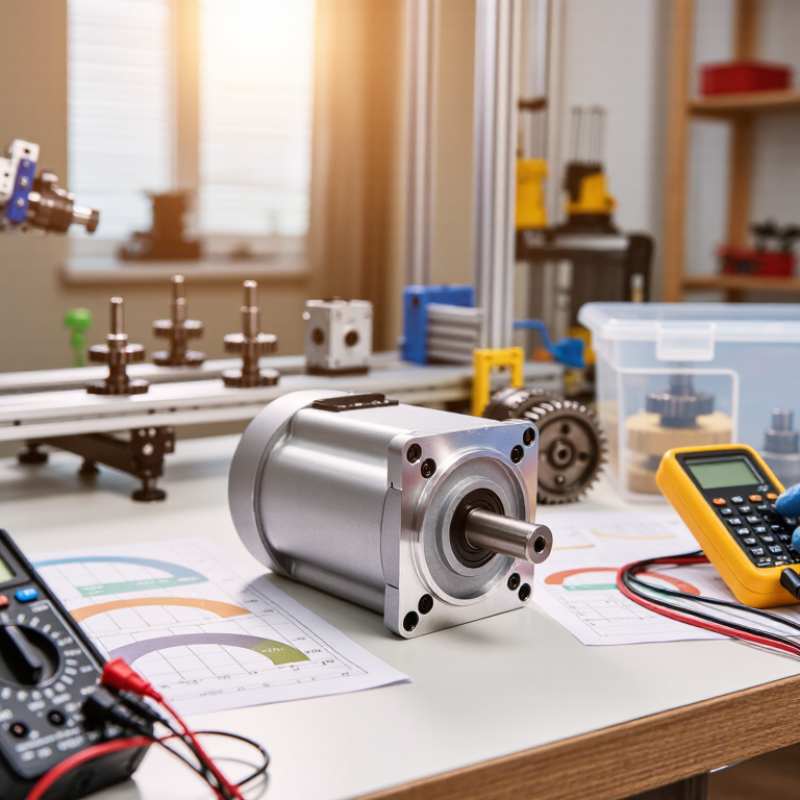
Define the Application Requirements for a 12V Gear Motor
How to Choose a 12V Gear Motor in 2026?
Define the application before comparing motors.
Measure the load, shaft speed, movement distance, and available space. Torque equals force multiplied by radius. A 20 N load on a 0.05 m arm needs 1 N·m before losses. Add a practical safety margin, usually 30% to 50%. Do not guess this value.
Speed matters just as much. Define the required output speed under load, not the unloaded catalog speed. A motor rated at 100 rpm may slow sharply during acceleration. Check starting torque, stall torque, and gearbox efficiency. At 12V, current rises quickly when torque increases. A 10 A motor can draw more during startup. Thin wires may create voltage drop and weak performance.
Duty cycle is often overlooked.
State whether the motor runs continuously, intermittently, or only for brief movements.
The U.S. Department of Energy reports that motor-driven systems use more than half of industrial electricity, highlighting the cost of inefficient operation.
For outdoor or dusty equipment, specify an appropriate ingress protection level. Also record ambient temperature and mounting conditions. Heat has nowhere to hide in a compact enclosure.
Real testing still matters.
A spreadsheet can be wrong. Measure current, temperature, noise, and stopping accuracy with the real gearbox and load. Leave room for uncertainty, because friction changes over time. IEC 60034-1 provides a useful framework for motor ratings, but it does not define your complete application. Your requirements must.
Match Torque, Speed, and Gear Ratio to the Load
How to Choose a 12V Gear Motor in 2026?
Choosing a 12V gear motor starts with the load, not the voltage label. Measure the required force, shaft radius, movement speed, and operating time. For a lifting drum, torque equals force multiplied by radius. A 4 kg load on a 50 mm drum needs about 1.96 N·m before friction and acceleration. Add a practical safety margin, usually 25% to 50%. Do not size from stall torque alone. Stall operation can overheat the winding and damage the gearbox.
Gear ratio controls the balance between torque and speed. A higher ratio increases output torque but reduces shaft speed. For example, a 3,000 rpm motor with a 1:50 gearbox may deliver about 60 rpm without load. Real output speed will fall under resistance. Check rated torque, continuous torque, peak torque, and gearbox efficiency. A motor that turns quickly may still feel weak during startup. That detail matters.
Test the motor with the actual mechanism. Include belt tension, bearing drag, uneven surfaces, and repeated starts. Confirm the 12V power supply can handle startup current, not only running current. I once underestimated acceleration demand because the load moved smoothly by hand. The motor stalled during the first cold start. Datasheet values are useful, but they are often ideal. Leave room for heat, wear, and imperfect alignment. Listen for noise. Watch the temperature. Small errors become expensive.
How to Choose a 12V Gear Motor in 2026?
Match torque, speed, and gear ratio to the load
The recommended output torque is calculated with an approximately 2× design margin above the estimated load torque. Higher gear ratios increase output torque and reduce speed, making them suitable for heavier or slower applications.
| Load Application |
Load Torque (N·m) |
Target Speed (rpm) |
Typical Gear Ratio |
Recommended Torque (N·m) |
| Small conveyor |
0.25 |
60 |
20:1 |
0.50 |
| Mobile wheel drive |
1.20 |
30 |
50:1 |
2.40 |
| Valve actuator |
3.00 |
10 |
150:1 |
6.00 |
| Lift mechanism |
5.00 |
5 |
300:1 |
10.00 |
These are representative engineering sizing examples for 12V DC gear-motor applications. Final selection should also verify duty cycle, starting current, stall torque, gearbox efficiency, mounting conditions, and thermal limits.
Select the Right Motor Type and Gearbox Configuration
How to Choose a 12V Gear Motor in 2026?
Choosing the right 12V gear motor starts with the movement, not the voltage label. Define the required speed, torque, duty cycle, and available installation space. A brushed DC motor can suit simple reversing systems and cost-sensitive equipment. A brushless motor may provide longer service life and quieter operation. However, it usually requires more complex control electronics.
The gearbox configuration changes the motor’s behavior significantly. Spur gears offer good efficiency and compact dimensions, but they may produce more noise. Planetary gearboxes handle higher torque in a small package and suit frequent starts and stops. Worm gearboxes can resist back-driving, although their efficiency is often lower. Check the rated output torque, not only the peak value. A motor producing 30 rpm at 20 Nm may still fail if the load repeatedly demands 25 Nm during acceleration.
Measure real conditions.
In practical testing, I connect the motor to a regulated 12V supply and monitor current during startup, reversing, and maximum load. Voltage drops in thin wiring can reduce speed and increase heating. An encoder helps maintain position, but it adds wiring and control requirements. I once selected a gearbox from its impressive peak torque alone; the motor overheated during continuous operation. That mistake was avoidable. Allow a safety margin of about 30%, then verify temperature, noise, backlash, and gearbox wear through a realistic test cycle. Specification sheets help, but field measurements often reveal the inconvenient details.
Check Power, Duty Cycle, Mounting, and Environmental Conditions
How to Choose a 12V Gear Motor in 2026?
Start with power, not voltage alone.
A 12V supply does not guarantee enough torque under load. Measure running torque, starting torque, speed, and stall current at the real operating point. A small conveyor may look light, yet its initial acceleration can demand several times its running current. Leave margin. The U.S. Department of Energy’s motor-system guidance recommends evaluating complete load profiles instead of relying on nameplate ratings. IEA analyses also estimate that motor-driven systems consume roughly half of global electricity, making efficient sizing more than a theoretical concern.
Duty cycle deserves equal attention.
IEC 60034-1 distinguishes continuous, short-time, and intermittent operation, which affect winding temperature and service life. A motor rated for brief movement may overheat during repeated cycles. Heat changes everything. Record cycle duration, rest time, starts per hour, and ambient temperature. In practice, selecting the highest advertised torque is not always wise; excessive reduction can increase noise, backlash, and energy loss. This is an easy choice to get wrong.
Mounting and environment often decide reliability.
Confirm shaft direction, mounting holes, cable position, and gearbox support before ordering. For dust or water exposure, compare the required enclosure with IEC 60529 IP ratings. IP54 is not waterproof, while condensation can still damage an otherwise protected assembly. Check temperature, vibration, chemicals, and washdown conditions. A published rating may assume ideal alignment and cooling, so verify the test conditions. The overlooked detail is usually the one that fails first.
Compare Control Options, Safety Features, Cost, and Supplier Support
Choosing a 12V gear motor starts with the control method, not the catalog price. Relay control suits simple forward and reverse movement. PWM control offers smoother speed adjustment and lower heat during partial-load operation. For frequent starts, choose a controller with current limiting, stall detection, and soft-start functions. A 12V supply can still create dangerous heat when a gearbox jams. The U.S. Department of Energy’s Motor System Market Assessment reports that motor-driven systems consume a major share of industrial electricity, so efficiency deserves attention even in small machines.
Safety details should match the working environment. Look for thermal protection, an accessible fuse, sealed connectors, and a housing rated for dust or moisture exposure. IEC 60204-1 emphasizes protective measures for machinery electrical systems, while ISO 13849-1 provides a framework for safety-related control functions. These standards do not automatically make a product safe. Installation and risk assessment still matter. I have seen compact motors fail because the designer ignored starting current and gearbox backlash.
Tips: Ask the supplier for no-load current, rated-load current, stall current, duty-cycle limits, noise data, and life-test conditions. Compare total cost, including controller, wiring, replacement gears, and shipping. Supplier support is practical evidence of reliability. Request drawings, test records, warranty terms, and response times before purchasing. A low-cost motor may look efficient on paper, but unavailable spare parts can stop a production line. That trade-off is easy to underestimate.
FAQS
Start with the load, movement speed, shaft radius, and operating time. For a 4 kg load on a 50 mm drum, required torque is about 1.96 N·m. Add 25% to 50% for friction and acceleration. Do not rely on stall torque alone. It can cause overheating.
A higher ratio usually increases torque and reduces output speed. A 3,000 rpm motor with a 1:50 gearbox may produce about 60 rpm without load. Resistance will lower the real speed. Fast does not always mean powerful.
Compare continuous torque, rated torque, peak torque, and gearbox efficiency. A motor rated at 20 N·m may fail when acceleration repeatedly needs 25 N·m. Peak values can look impressive. I once trusted one too much.
Spur gears are compact and efficient, but they can be noisy. Planetary gears handle higher torque in limited space. Worm gears may resist back-driving, but efficiency is often lower. Choose according to movement and duty cycle.
Brushed motors suit simple reversing systems and cost-sensitive equipment. Brushless motors may run more quietly and last longer. They usually require more complicated control electronics. Simple can be better.
Test it with the actual belt, bearings, surface, and load. Measure current during startup, reversing, and maximum load. Watch temperature and listen for unusual noise. Hand movement can feel easy, but motors may stall during cold starts.
The 12V supply must handle startup current, not only running current. Thin wires can cause voltage drops, slower movement, and extra heating. Use suitable fuses and secure connectors. Small wiring mistakes become expensive.
Relay control works for basic forward and reverse movement. PWM control allows smoother speed adjustment and can reduce partial-load heat. Frequent starts benefit from current limiting, stall detection, and soft start. A jammed gearbox can create dangerous heat.
Request no-load current, rated-load current, stall current, noise data, and duty-cycle limits. Ask for drawings, test records, warranty details, and replacement gear availability. Compare controllers, wiring, shipping, and maintenance costs. The cheapest motor may stop a production line later.
Conclusion
Choosing the right 12V Gear Motor in 2026 starts with clearly defining the application. Consider the required load, operating speed, available space, motion pattern, and expected precision before comparing products. Match the motor’s torque and speed to the actual load, then select a suitable gear ratio to balance power, efficiency, and operating performance. A higher reduction ratio may provide greater torque, while a lower ratio can support faster movement.
Next, evaluate the motor type and gearbox configuration, such as brushed or brushless designs and different gear materials or layouts. Check rated power, duty cycle, mounting dimensions, shaft design, noise, heat generation, and protection against dust or moisture. Control requirements are also important, including direction control, speed adjustment, feedback, overload protection, and safe stopping. Finally, compare total cost, service life, spare-part availability, technical support, and delivery reliability to ensure the 12V Gear Motor delivers dependable performance throughout its intended service life.
 Goaxis Pro
