Choosing the right AC Gear Motor in 2026 requires more than matching voltage and torque. Motor systems consume a significant share of global electricity, according to the International Energy Agency. The U.S. Department of Energy also reports that motor-driven equipment uses about 23% of American electricity. These figures make efficiency a purchasing issue, not merely a technical preference. A small motor running continuously can quietly increase operating costs. A poorly selected gearbox can also create heat, vibration, and premature bearing wear.
This guide examines the practical factors behind a reliable selection. It considers load torque, starting conditions, speed reduction, duty cycle, ambient temperature, noise, enclosure protection, and control compatibility. IEC 60034-30-1 provides a recognized framework for motor efficiency classes, while manufacturers publish performance curves for torque, speed, and thermal limits. Those documents deserve careful comparison. Marketing labels alone are not enough.
Real equipment often behaves differently from a laboratory example. A conveyor may start with a heavy product, then run lightly for hours. A packaging machine may demand repeated reversals. In both cases, rated power can hide the real requirement. Engineers should measure the driven load whenever possible. They should also verify service factor, gearbox backlash, shaft dimensions, and maintenance access. I may favor a conservative selection here, because under-sizing usually costs more than modest over-sizing. Still, excessive capacity wastes energy and money. The best AC Gear Motor balances performance, lifecycle cost, safety, and future operating changes. That balance deserves evidence, not guesswork.
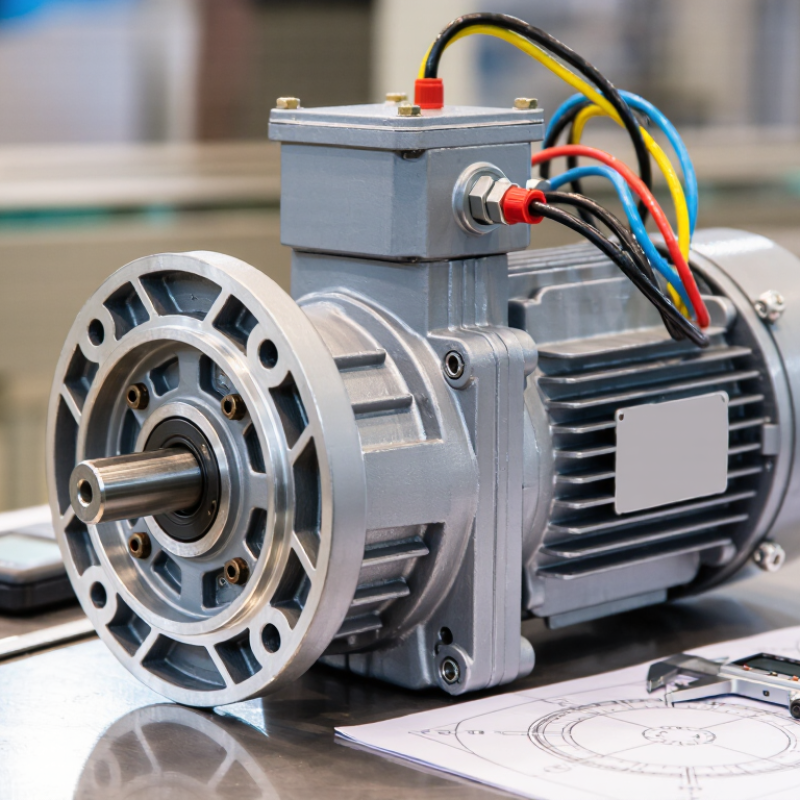
How to Choose the Right AC Gear Motor in 2026?
Before selecting an AC gear motor, define the real application clearly. Identify the required speed, torque, duty cycle, and rotation direction. A conveyor moving 20 kilograms needs different performance from a small positioning system. Measure the load during startup, not only during steady operation. Starting resistance can be surprisingly high. Also record shaft orientation, available space, ambient temperature, and expected operating hours. These details prevent an attractive but unsuitable specification.
Tips: Create a simple operating profile. Note the load, running time, stops, starts, and speed changes. Include unusual conditions, such as cold starts or frequent reversing. Leave a reasonable torque margin, but avoid excessive oversizing. A larger motor may waste energy and create unnecessary mechanical stress.
I have seen projects fail because the rated load looked acceptable on paper. The real machine had brief jams and repeated acceleration cycles. Those moments changed the motor’s thermal demand. Check the gearbox ratio against the required output speed. Then confirm that the motor can handle the actual duty cycle continuously. Review noise limits, mounting accuracy, and maintenance access as well. Small installation errors can cause vibration, heat, and premature wear. The application may seem simple, but its operating pattern often tells the real story.
Choosing an AC gear motor starts with the load, not the catalog label. In practical commissioning, shaft torque matters more than rated horsepower. A helical gearbox suits conveyors and mixers because its teeth transfer power efficiently and run relatively quietly. A worm gearbox is compact and may resist back-driving, but sliding contact creates heat and lowers efficiency. Planetary units deliver high torque in a short housing, although they require better alignment and often cost more. A common mistake is underestimating starting torque on a loaded conveyor. The motor may stall.
Drive configuration also changes the selection. A fixed-speed induction motor with direct-on-line starting is simple and economical for fans or constant-speed pumps. It can draw high starting current, and repeated starts may stress couplings. A variable-frequency drive provides controlled acceleration, adjustable speed, and smoother process control. Yet low-speed operation can reduce cooling when the motor fan slows. Check motor compatibility, overload settings, braking requirements, and enclosure ratings. Three-phase systems usually provide smoother operation. Single-phase systems may suit lighter equipment.
Measure duty cycles, ambient temperature, shock loads, and mounting position before choosing. Do not size from average torque alone. Peak torque can decide everything. Leave room for uncertainty, but avoid excessive oversizing because it can reduce efficiency and control quality. Recheck noise, backlash, and output speed after installation. Small errors appear quickly.
Torque, speed, power, and duty cycle should be calculated together. The International Energy Agency reports that electric motor systems consume about 46% of global electricity. Small sizing errors therefore create measurable waste.
Use this formula:
Torque (Nm) = 9550 × Power (kW) ÷ Speed (rpm).
A 0.37 kW motor turning at 30 rpm produces about 118 Nm before losses. Gearbox efficiency, usually between 70% and 95%, must reduce the available output torque.
Speed alone is not enough. Check starting torque, shock loads, reflected inertia, and the required acceleration time. A conveyor carrying 80 kilograms may run steadily, yet demand several times its running torque during startup.
The U.S. Department of Energy’s motor-system guidance shows that system optimization can deliver significant energy savings, often around 10% to 15%. Measure the real load when possible.
Duty cycle controls heat. IEC 60034-1 distinguishes continuous S1 operation from intermittent S3 operation. For example, a 40% duty cycle means the motor runs for 4 minutes during each 10-minute period. Select the thermal rating from the complete cycle, not the average speed alone.
Real machines are less tidy. My first estimate is often wrong when starts are frequent, ventilation is restricted, or the gearbox runs above its rated temperature. Leave practical margin, but avoid oversized motors that run inefficiently.
Voltage selection starts with the nameplate, not the catalog headline. Confirm supply voltage, frequency, phase, starting current, and allowable variation. A 230-volt motor may run poorly on unstable industrial power. The International Energy Agency reports that motor-driven systems consume about 50% of global electricity. Efficiency therefore affects both operating cost and heat inside the enclosure. Choose the highest practical IEC 60034-30-1 efficiency class, but check actual torque at the required speed. A highly efficient motor can still waste energy if it is oversized.
Mounting details are equally important. Verify flange dimensions, shaft diameter, keyway, rotation, and gearbox orientation. A few millimeters of mismatch can create vibration and premature bearing wear. I have seen selection sheets overlook cable clearance. That small omission caused installation delays. Do not trust dimensions alone. Confirm the load’s duty cycle, acceleration time, and radial force.
Environmental ratings need physical context. IEC 60529 IP ratings describe protection against dust and water, not chemicals, corrosion, or explosive atmospheres. For washdown areas, specify suitable sealing materials and stainless hardware. For dusty workshops, an IP55 enclosure may be reasonable, but fine powder can demand more protection. The U.S. Department of Energy notes that motor systems can exceed half of industrial electricity use. That makes efficiency valuable, though maintenance, ventilation, and correct mounting often decide real-world performance. Data sheets simplify conditions. Your site will not.
Compatibility should be checked before efficiency claims. Match voltage, frequency, phase, mounting pattern, shaft diameter, gear ratio, and duty cycle. Confirm the motor can start under the real load, not an ideal laboratory load. The U.S. Department of Energy reports that motor-driven systems can consume about 70% of industrial electricity. Small mismatches can become expensive.
Reliability depends on heat, vibration, loading, and enclosure protection. Select an IP rating suitable for dust, moisture, and washdown conditions. Compare rated torque with actual starting torque and peak loads. Request test records, insulation class, bearing details, and expected service life. IEC 60034-1 provides widely used requirements for rotating electrical machines. Certification helps, but it does not replace application testing.
Maintenance access matters. A removable terminal cover, standard bearings, and available replacement parts can reduce downtime. The DOE Operations & Maintenance Best Practices guide reports predictive maintenance savings of roughly 8–12% compared with preventive maintenance, and 30–40% compared with reactive repairs. Measure temperature and vibration during commissioning. I have seen selection sheets overlook installation alignment. That mistake is common. Total cost should include energy, lubricant, inspection labor, spare inventory, and lost production. The cheapest motor may not stay cheap. Recheck the calculation after six months.
Start with load torque, speed, duty cycle, and peak starting demand. Catalog horsepower alone can mislead.
A helical gearbox transfers power efficiently and usually runs quietly. It suits steady conveying and mixing work.
Its compact shape helps in tight spaces. It may resist back-driving, but sliding contact creates heat and lowers efficiency.
It delivers high torque from a short housing. Better alignment is needed, and purchase costs are often higher.
Designers may calculate average torque only. A fully loaded conveyor can demand much higher starting torque and stall the motor.
A fixed-speed induction motor works well for fans and constant-speed pumps. It is simple, but starting current can be high.
Confirm motor compatibility, overload settings, braking needs, cooling, and enclosure protection. Low speed may reduce fan cooling.
Check voltage, frequency, phase, starting current, and supply variation on the nameplate. Three-phase power usually runs more smoothly.
Verify flange size, shaft diameter, keyway, rotation, orientation, and cable clearance. A few millimeters can create vibration.
Consider dust, water, heat, corrosion, and washdown exposure. Dust protection alone does not cover chemicals or every site hazard.
Choosing the right AC Gear Motor in 2026 starts with a clear understanding of the application and operating requirements. Define the load type, motion pattern, operating hours, start-stop frequency, noise limits, and available installation space. Then compare suitable motor types and drive configurations, considering whether fixed-speed operation, variable-speed control, or integrated control is most appropriate. Accurate calculations of required torque, output speed, power, acceleration, and duty cycle are essential to prevent overheating, poor performance, or premature wear.
Next, evaluate voltage compatibility, energy efficiency, mounting position, enclosure protection, temperature range, and environmental conditions such as dust or moisture. Confirm that the motor can integrate safely with the existing mechanical and electrical systems. Reliability, service access, lubrication needs, replacement parts, and expected maintenance should also be reviewed before making a decision. Finally, compare the total cost of ownership, including purchase price, installation, energy consumption, downtime, and long-term maintenance. A well-matched AC Gear Motor should deliver dependable performance, efficient operation, and practical value throughout its service life.
