Selecting a motor for global applications involves more than comparing power ratings and purchase prices. A Smart Motor can support equipment used across factories, warehouses, water systems, and commercial buildings. Its embedded sensors may monitor temperature, vibration, current, and operating hours. These details help maintenance teams identify unusual behavior before a shutdown occurs.
Global projects also face different voltage systems, frequencies, communication networks, climates, and installation practices. A Smart Motor with flexible controls can simplify integration across several locations. Engineers should still verify voltage compatibility, protection ratings, communication protocols, and regional certification requirements. Manufacturer datasheets and independent test reports provide stronger evidence than marketing claims. Field experience matters too. A motor operating in a dusty workshop needs different protection than one installed inside a clean production room.
It is not a magic box.
Remote diagnostics can reduce unnecessary service visits, but reliable connectivity is not guaranteed everywhere. Sensor data may also create confusing alerts when teams lack training or clear maintenance procedures. This is an area where product expectations can become unrealistic. The best choice depends on the application, operator skills, service support, and total lifecycle cost. When these factors are reviewed carefully, a Smart Motor can improve energy visibility, operational control, and maintenance planning across borders. The benefits are practical, but only when performance is measured after installation.
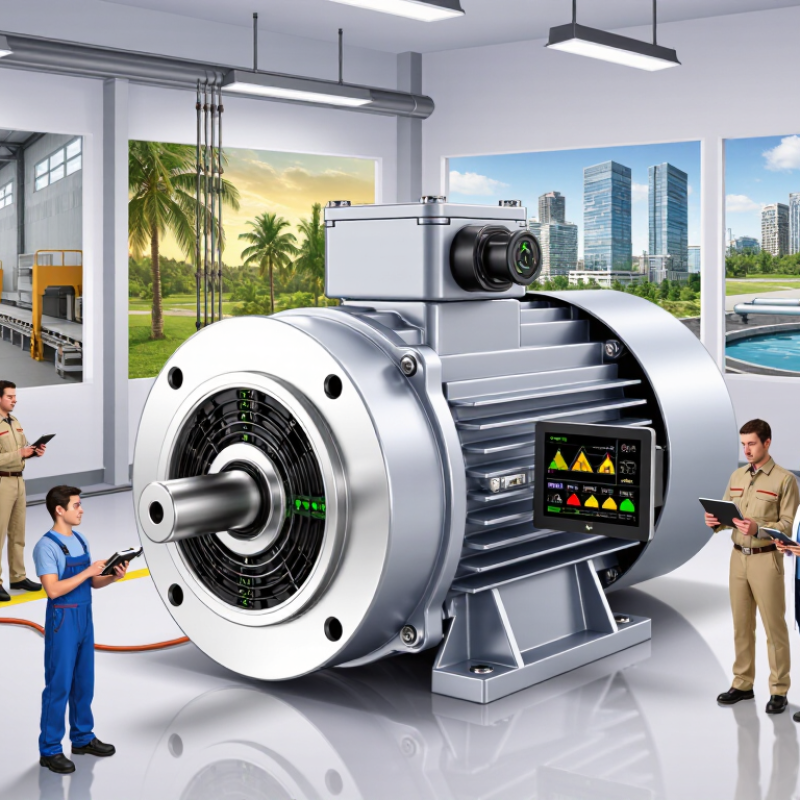
A smart motor combines an electric motor with sensors, embedded control, and communication functions. Unlike a conventional motor, it can report speed, temperature, torque, vibration, and current while operating. These measurements create a feedback loop. The controller compares actual performance with target settings, then adjusts voltage, frequency, or torque. This process helps the motor respond to changing loads instead of running at one fixed output.
In a packaging line, for example, a motor may slow when cartons jam and recover after the load clears. An operator can view this condition remotely, while local protection can stop the motor during overheating or abnormal current. That response reduces wasted energy and gives maintenance teams useful evidence before a bearing fails. However, smart control is not magic. Poor calibration, weak network security, or dirty sensors can produce misleading data. Engineers should verify readings against physical inspections and documented testing.
For global applications, the motor system must match local voltage, frequency, safety rules, and communication requirements. Clear diagnostics also help multilingual teams identify faults without guessing. Yet standardization can expose limits. A setting that works in one factory may perform poorly with another gearbox, climate, or duty cycle. Practical commissioning, protected data links, and regular firmware review make the system more dependable across sites. Technicians still need to inspect the machine, even when the dashboard looks normal.
| Dimension | What It Means | Typical Smart Motor Capability | Global Application Value |
|---|---|---|---|
| Definition | A motor combined with embedded electronics, sensors, control software, and communication functions. | The motor can monitor operating conditions and adjust its operation without relying entirely on a separate control cabinet. | Supports distributed machine designs and simplifies integration across different equipment platforms. |
| Operating Principle | Sensors collect information while a controller uses programmed logic to regulate motor behavior. | Closed-loop control can use speed, position, torque, current, temperature, or vibration feedback. | Enables stable performance under changing loads, supply conditions, and production requirements. |
| Energy Management | Motor output is matched more closely to the actual mechanical demand. | Variable-speed control can reduce throttling and unnecessary running at full speed, especially in fans and pumps. | Can lower energy consumption and operating costs when correctly sized, configured, and maintained. |
| Feedback and Sensing | Integrated sensors provide information about the motor and connected equipment. | Common measurements include current, voltage, speed, position, winding temperature, and vibration. | Improves visibility for remote monitoring, condition-based maintenance, and fault diagnosis. |
| Control Accuracy | The system regulates speed, position, or torque according to application requirements. | Feedback-based control generally provides more accurate and repeatable motion than basic open-loop operation. | Useful for conveyors, robotics, packaging, machine tools, and other applications requiring consistent motion. |
| Communication | The motor exchanges operating data and commands with a controller or industrial network. | Depending on the design, communication may use industrial Ethernet, fieldbus, serial communication, or digital and analog I/O. | Allows integration with automation systems used in different regions and facility types, subject to local specifications. |
| Protection Functions | Built-in protection helps detect abnormal electrical or mechanical conditions. | Typical functions include overcurrent, overload, overtemperature, undervoltage, overvoltage, stall, and communication-loss detection. | Can reduce avoidable damage and support safer, more reliable operation when correctly configured. |
| Maintenance | Maintenance decisions are supported by operating data instead of fixed schedules alone. | Alarm history, runtime data, temperature trends, and vibration information can help identify developing problems. | May reduce unplanned downtime and improve spare-parts planning, although sensor quality and data analysis remain important. |
| Installation Footprint | Control functions are placed closer to the motor or integrated into the motor assembly. | May reduce the amount of external control hardware, wiring, and cabinet space required. | Beneficial for compact machinery, modular equipment, and installations where cable routing is difficult. |
| Voltage and Frequency Adaptability | The motor and its electronics must match the available electrical supply and application requirements. | Many systems support defined voltage and frequency ranges through electronic drive control; the actual range is model-specific. | Helps standardize equipment for international projects, but local electrical codes and nameplate ratings must always be checked. |
| Environmental Suitability | Performance depends on enclosure design, cooling, ambient temperature, humidity, dust, and installation conditions. | Protection levels and allowable ambient conditions vary by design; enclosure ratings must be selected for the actual environment. | Supports applications ranging from clean indoor machinery to demanding industrial environments when properly specified. |
| Cybersecurity | Network-connected motors can become part of an industrial control system. | Security measures may include access control, network segmentation, authenticated updates, and restricted communication paths. | Important for protecting production availability and operational data in connected global facilities. |
| Best-Fit Applications | Smart motors are most valuable where motor behavior affects productivity, quality, energy use, or maintenance. | Common uses include conveyors, pumps, fans, compressors, packaging equipment, automated storage, and robotic systems. | Provides scalable monitoring and control for factories, logistics centers, buildings, water systems, and process equipment worldwide. |
It adjusts power according to the actual load. A light conveyor load may need less speed and energy. A heavier load triggers a faster response. Small savings accumulate.
Sensors can track load, temperature, speed, vibration, and running hours. Rising heat may signal overload or poor cooling. Increasing vibration can suggest mechanical wear. Sensor placement still needs checking.
Operators can review performance without opening a hot electrical cabinet. Maintenance teams can plan inspections from measured conditions. This may reduce emergency stoppages. Data alone is not enough.
They can support varied voltage systems, frequencies, controllers, and industrial networks. Local electrical rules still require verification. Grounding and electromagnetic compatibility may differ. Compatibility is never automatic.
Check support for common Ethernet-based industrial protocols. Standard data structures help controllers read speed, torque, and fault codes. Basic local control is also valuable. Networks sometimes fail.
Examine dust, humidity, corrosion, heat, and duty cycles at the installation site. Coastal equipment may need stronger corrosion protection. Hot areas may require thermal derating. Indoor conditions can mislead evaluations.
No. A complex dashboard may add little value on a simple production line. Compare real load patterns, energy prices, service skills, and replacement time. More features can create more confusion.
Test the motor with the actual controller, network, and maintenance process. Verify calibration, operating limits, and local electrical requirements. Record the test results for future technicians. The first setup is rarely perfect.
Use lifecycle cost instead of purchase price alone. Include energy use, spare parts, software support, downtime, and service capacity. Use real operating data. Optimistic estimates often fail.
A Smart Motor combines an electric motor with integrated sensors, control software, and communication capabilities to monitor performance and adjust operation in real time. By tracking factors such as speed, temperature, torque, and energy consumption, it can respond more accurately to changing workloads than a conventional motor. These functions help reduce energy waste, support predictive maintenance, and improve overall operational control across industrial applications.
For global use, Smart Motor systems should offer flexible voltage and frequency support, adaptable control settings, multilingual interfaces, and compatibility with widely used automation networks. Remote monitoring and data access can simplify management across different facilities, while standardized connections make integration easier with existing equipment. When evaluating options for different markets, businesses should consider local electrical requirements, environmental conditions, maintenance capabilities, cybersecurity, total ownership cost, and long-term scalability. A suitable Smart Motor should deliver reliable performance while remaining practical to install, operate, and support in diverse regions.

 Goaxis Pro